RACP Divisional Written Exam · FRACP
Endocrinology for the written exam
Everything Physify has for Endocrinology: short lessons written to Australian guidance, exam-style questions with a worked explanation for each, and Bedside, our AI tutor, under every one. Try a question below, no sign-up.
- courses
- 27courses
- lessons
- 209lessons
- exam-style questions
- 658exam-style questions
- figures in the lessons
- 18figures in the lessons
Try one now · no sign-up
Endocrinology
Pick an answer to see the explanation
What's covered
27 courses, each a set of lessons with a quiz after them. The bar shows how many questions each has. Open a course to see its lesson outline.
- Adrenal Disorders12 lessons · 31 Qs
- Australian Guidance Versus Overseas: Cardiovascular, Renal, Endocrine, Respiratory and Neurology4 lessons · 30 Qs
- Bone & Mineral Metabolism8 lessons · 21 Qs
- Bone Remodelling and Mineral Homeostasis5 lessons · 31 Qs
- Cardiovascular Risk & Primary Prevention5 lessons · 31 Qs
- Diabetes Mellitus10 lessons · 28 Qs
- Endocrine Disorders in Systemic Disease7 lessons · 20 Qs
- Endocrine Emergencies11 lessons · 31 Qs
- FGF-23 Physiology4 lessons · 6 Qs
- Fuel Metabolism and Glucose Homeostasis5 lessons · 30 Qs
- Gonadal Disorders14 lessons · 33 Qs
- Hormone Axes: Synthesis, Feedback and Receptor Action5 lessons · 30 Qs
- Hyperthyroidism9 lessons · 31 Qs
- Hypothalamic Disorders10 lessons · 10 Qs
- Hypothyroidism10 lessons · 30 Qs
- Insulin Autoimmune Syndrome3 lessons · 10 Qs
- Landmark Trials 2016 to 2026: Endocrinology and Diabetes5 lessons · 26 Qs
- Landmark Trials: Endocrinology, Gastroenterology and Respiratory Medicine5 lessons · 30 Qs
- Lipid Disorders, Metabolic Syndrome & Obesity15 lessons · 21 Qs
- Miscellaneous Endocrine Disorders7 lessons · 20 Qs
- Multiple Endocrine Neoplasia8 lessons · 25 Qs
- Pancreatic Neuroendocrine Tumours5 lessons · 5 Qs
- Parathyroid Disorders9 lessons · 30 Qs
- Pituitary Adenomas9 lessons · 25 Qs
- Pituitary Disorders10 lessons · 30 Qs
- Thyroid Nodules & Goitre7 lessons · 22 Qs
- Thyroiditis7 lessons · 21 Qs
From the lessons
18 figures sit in the Endocrinology lessons: ECGs, diagrams, films and clinical images, each with what to look for. Here are 4. Tap one to enlarge it.
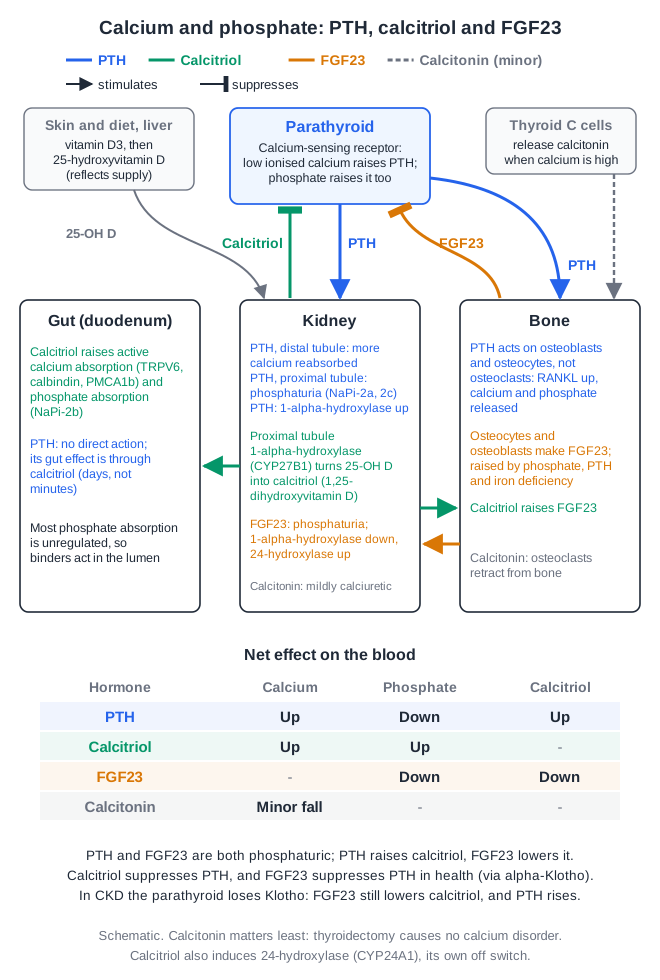
From the lesson “Calcium and Phosphate: Gut, Kidney and Bone with PTH, Vitamin D and FGF23” in Bone Remodelling and Mineral Homeostasis
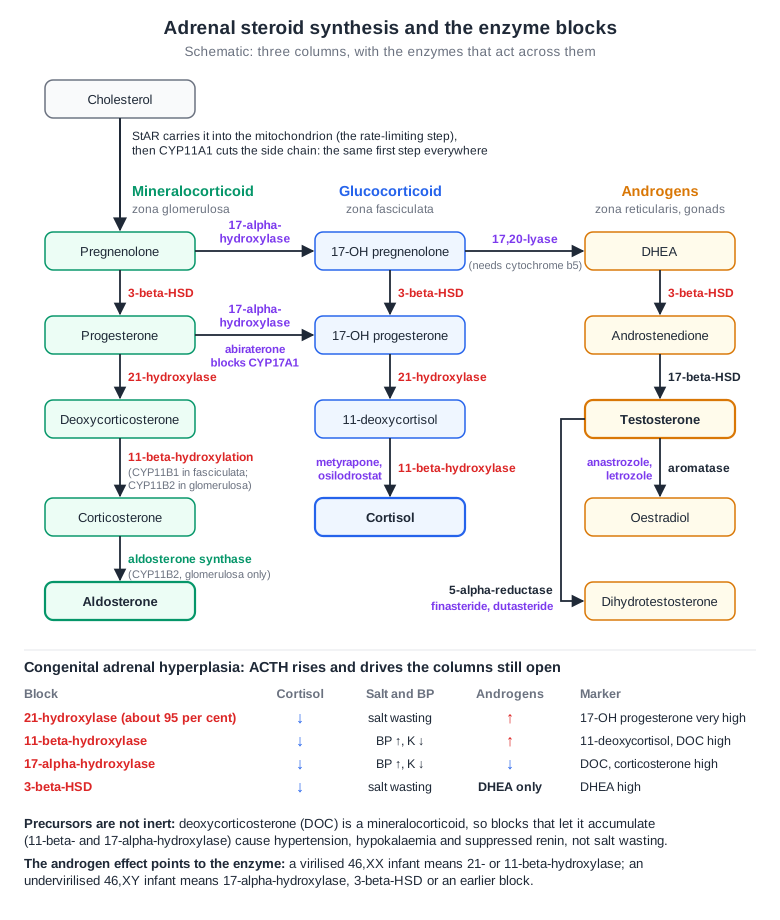
From the lesson “Congenital Adrenal Hyperplasia: 21-Hydroxylase Deficiency, Genetics and Diagnosis” in Adrenal Disorders
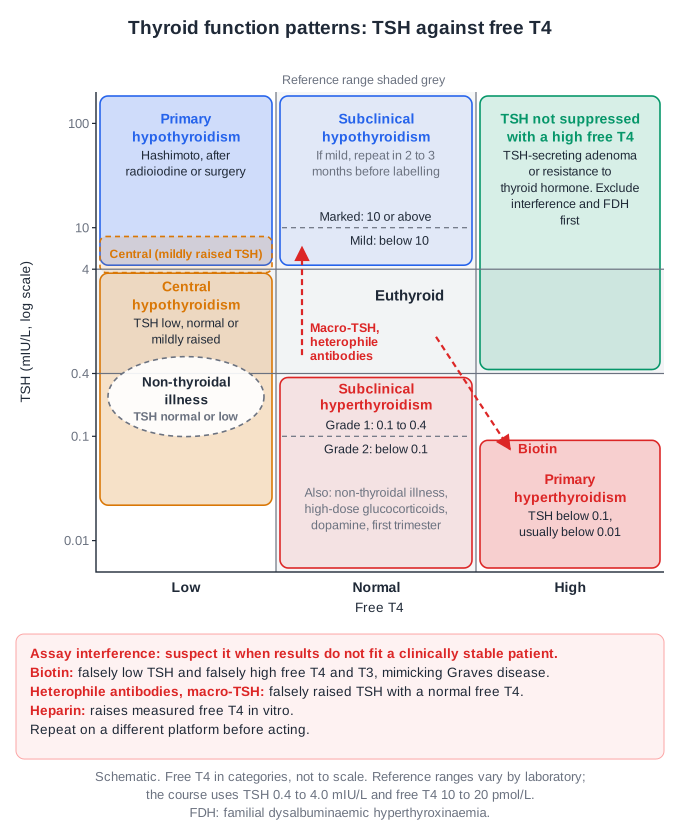
From the lesson “Central Hypothyroidism and Test Interference” in Hypothyroidism
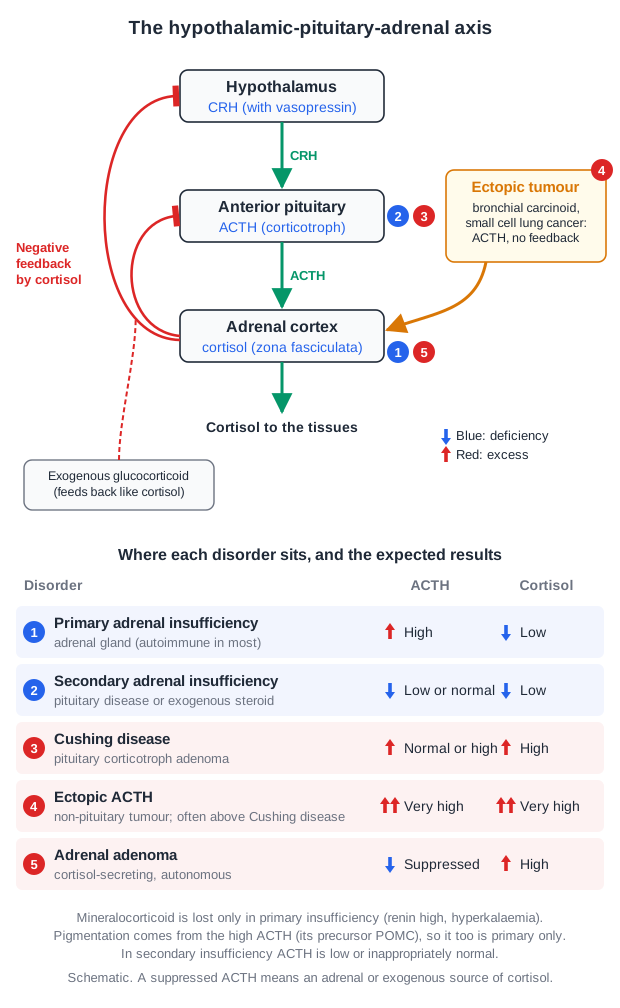
From the lesson “Feedback, Localising the Lesion, and the Growth Hormone and Prolactin Axes” in Hormone Axes: Synthesis, Feedback and Receptor Action
Free for Endocrinology
Endocrinology in the clinical exam
14 interactive short cases and 3 long cases for the RACP Divisional Clinical Exam: you examine, present and are marked on the five RACP domains.
See the clinical exam →Endocrinology on the blog
All posts →Diabetes Insipidus and SIADH: Trials of Note for the RACP Exam
AVP deficiency and SIAD for the RACP exam: the 2022 renaming, the Australian HEDTA copeptin protocols, CARGOx, fluid restriction, empagliflozin and tolvaptan.
DiGeorge Syndrome (22q11.2 Deletion): Key Points for the RACP Exam
22q11.2 deletion for the RACP exam: hypocalcaemia and thyroid disease in adults, athymia and thymic implant, TREC screening, and where PTH replacement fits.
Empty Sella Syndrome: Key Points for the RACP Exam
Empty sella for the RACP exam: incidental finding or syndrome, which pituitary tests to order under Australian HEDTA protocols, and the link with raised ICP.
Familial Hypocalciuric Hypercalcaemia: RACP Exam Notes
FHH for the RACP exam: why the calcium to creatinine clearance ratio misleads, when to send genetics before surgery, types 1 to 3, and where cinacalcet fits.
Hyperthyroidism and Graves' Disease: RACP Exam Notes
Graves' disease for the RACP exam: carbimazole doses (MJA), long-term antithyroid drugs, PTU in pregnancy, and teprotumumab, PBS listed for thyroid eye disease.
Hypopituitarism: Key Points for the RACP Exam
Hypopituitarism for the RACP exam: Australian HEDTA dynamic tests, replacement order, adult GH and the PBS, weekly somapacitan and checkpoint inhibitors.
Open all of Endocrinology
A membership opens every lesson and all 658 Endocrinology questions, with the rest of the bank (11,500+ questions across 17 specialties), 15 timed mock exams, smart review and a daily plan to your exam.
The trial needs a card; cancel any time before it ends and you pay nothing. The free account needs no card.